 The 1,000-Yard Chess Match: Your Ultimate Guide to Starting PRS in 2026
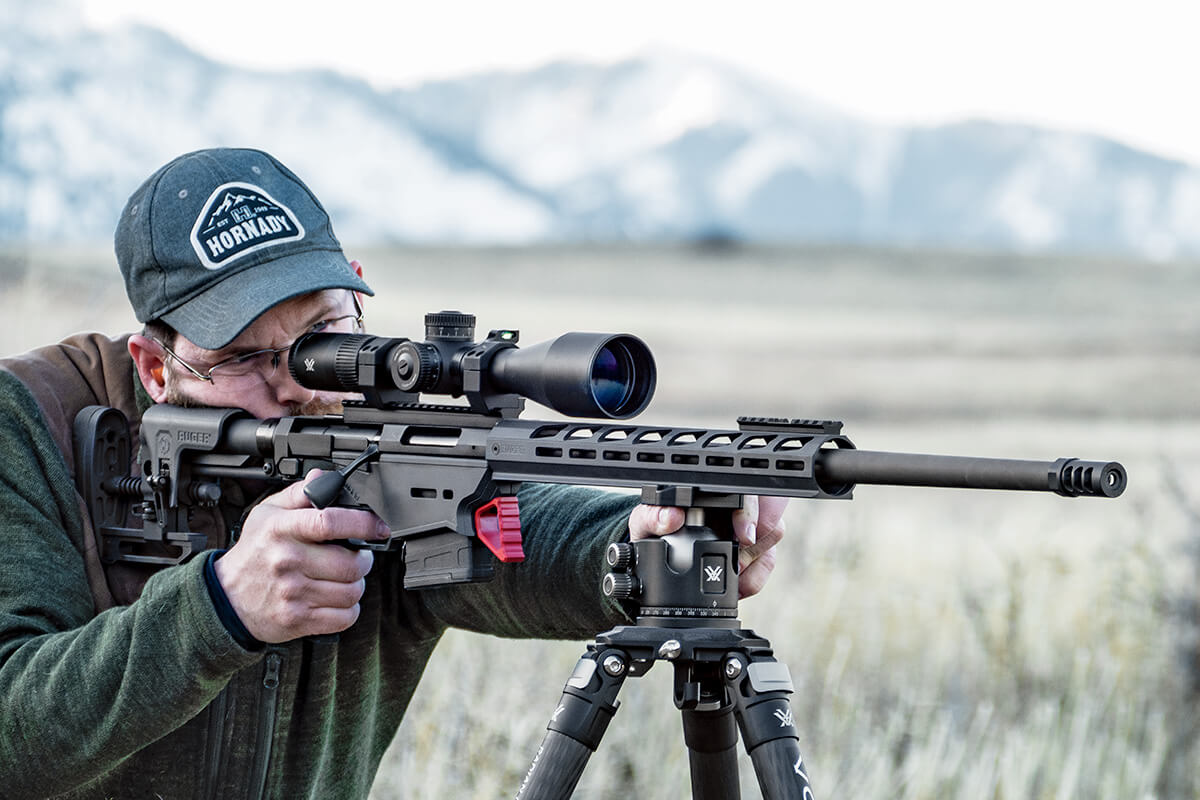
If you’ve been following the trends at wintheguns.com, you’ve likely noticed a shift in the landscape. The tactical carbines and concealed carry pistols are still essential tools, but they are increasingly sharing the spotlight with heavy, bolt-action rifles sporting chassis systems that look like they belong on a spacecraft.
Welcome to the Precision Rifle Series (PRS).
As we move deeper into 2026, PRS has exploded from a niche sport for ballistics nerds into the fastest-growing shooting discipline in America. It is a sport where physical stability meets mental agility, often described as “yoga with a rifle.” If you are tired of punching static paper at 100 yards and want to stretch your legs out to 1,200 yards and beyond, this is your year to get started.
1. The 2026 “Production” Rifle Revolution
Exploring the Precision Rifle Series: What You Need to Know
Five years ago, getting into PRS meant spending $4,000 on a custom rifle just to not be laughed off the line. In 2026, the Production Class has completely changed the game. Manufacturers like Bergara, Tikka, and MasterPiece Arms are now shipping “Race-Ready” rifles that are capable of taking home trophies right out of the box.
-
The Chassis Standard: In 2026, a top-tier precision rifle doesn’t have a traditional hunting stock. It uses a modular chassis with an Arca-Swiss rail running the full length of the forend. This allows you to slide your bipod and shooting bags instantly to balance the rifle on barricades, tank traps, and cattle gates.
-
Caliber Kings: While the 6.5 Creedmoor started it all, 2026 is the year of the 6mm. Cartridges like the 6mm GT and 6mm Dasher have taken over because they offer laser-flat trajectories with significantly less recoil. Less recoil means you can spot your own impacts (or misses) through the scope, which is the single most important skill in the game.
2. Glass: The First Focal Plane Necessity
You cannot fake it with optics in PRS. Because the targets are at unknown distances and you are constantly dialing elevation or holding over for wind, you need a First Focal Plane (FFP) scope.
In an FFP scope, the reticle grows and shrinks as you zoom. This means that “1 Mil” of holdover at 12x magnification is the exact same distance as “1 Mil” at 25x magnification. In 2026, we are seeing a move toward “Christmas Tree” reticles—grid patterns that allow you to hold for wind and elevation simultaneously without touching your turrets.
Pro Tip: Don’t blow your whole budget on the rifle and skimp on the glass. A $1,000 rifle with a $2,000 scope will outperform a $3,000 rifle with a $500 scope every single time.
3. The “Game Changer” and Support Gear
You might be surprised to learn that in PRS, you rarely shoot from the prone position. You are shooting off rooftops, through tires, and over swaying ropes. This is why the Shooting Bag is the most critical accessory in your kit.
The “Game Changer” style bag—a heavy, sand-filled wax canvas bag—is the industry standard. You throw it over a barricade, and it creates a rock-solid platform for your rifle. In 2026, if you show up to a match without a support bag, you are bringing a knife to a gunfight.
-
Tripods: Once considered a luxury, a sturdy carbon-fiber tripod is now mandatory for rear support in standing positions.
-
Ballistic Data: You need a way to calculate your bullet’s path. Whether it’s a dedicated Kestrel 5700 weather meter or a ballistic app on your phone, you must know your “DOPE” (Data On Previous Engagement) before the timer beeps.
4. The 2026 Rimfire Entry Ramp
If the cost of centerfire ammo scares you, 2026 has the answer: Rimfire PRS (NRL22). Using .22 LR rifles to shoot tiny steel targets at 100-300 yards simulates the exact same math and wind reading as shooting a centerfire rifle at 1,000 yards. It is the perfect training ground.
We are seeing tons of shooters build a “Trainer” .22 LR that mimics the weight and balance of their big match rifle. It allows you to burn 500 rounds in practice for the cost of a sandwich.
5. Maintenance: The “Precision” Clean
PRS rifles are run hard. They get dusty, muddy, and hot. But you can’t just run a bore snake through them and call it a day.
-
Copper Equilibrium: Unlike a hunting rifle that needs a cold-bore zero, PRS rifles often shoot best when slightly “fouled.” In 2026, many top shooters only strip the copper from their barrels every 300-400 rounds to avoid erratic velocity shifts.
-
Action Smoothing: Keep your bolt lugs greased. A smooth bolt cycle allows you to run the gun without disturbing your sight picture, letting you get those rapid follow-up shots on the mover stages.
Conclusion: Just Sign Up
The biggest barrier to entry in PRS isn’t gear; it’s intimidation. But the reality is that the long-range community is the most helpful group you will ever meet. If you show up to a local match with a basic rifle and a good attitude, veterans will lend you their bags, their tripods, and probably even their ammo.
Don’t wait for the “perfect” setup. Grab what you have, get your DOPE, and get out there.
Ready to start your journey? Head over to wintheguns.com to check out our current active giveaways. We frequently feature precision rifles, top-tier optics, and the gear you need to compete at the highest level.
My vision is pretty bad and I wear pretty strong glasses. I don’t know that I have the eyes for prs
would be fun to test my abilities
My pockets said that PRS is going to have to wait.
Need a range over 100 yards….. this area sucks for ranges.. there are none.
Start with the best optic you can afford and a learning rifle that you can just shoot the barrel out of while learning the basic skills. No reason to shoot out a barrel on a rifle that you lack the skills to get much benefit out of because you cannot yet read wind or conditions. Get ammo that is good enough for learning and refine your load as you go or buy better as you build skills.
Best way to get in the game is buy a really nice scope as it will help you the most when starting out, and it can move to another rifle. Pair it with something like a 24″ heavy barreled Savage to start. Shoot it until you decide if this is your thing or not. If so, shoot it until you have built a solid long range skillset like remembering your range card for your load, reading conditions and ranging that would allow you to benefit from a better rifle and more understand what you want in that better rifle. Get that rifle and move your scope to your new rifle. A friend has 5 really nice long range guns that all came from someone who wanted to get in the game then decided watching others out shoot them with “lesser” guns was not to their liking. At some point they needed the space in their safe or wanted money for something else. You cannot buy an edge if you do not have skillset to utilize said edge. You do not need big bucks to get that skillset and enjoy the sport.
Also need access to a place to practice. 🙁
Wish I had a longer range
I love PRS shooting, and wish I had morew places to take advantage of it. A great scope is certainly the MOST important thing to invest in, without that, you could sone dthousand on a rifle and never hit the side of a barn at distance.
Great advice. I help ranchers eliminate ground hogs from their ranchers. Ground hogs dig holes all over the ranch and cattle step in the holes and break their legs. So, ever month or so, we set up at the ranch to eliminate these little destructive critters. So as not to scare them off, we set up 300-500 yards away and wait for them to come out of there holes.
I think id fail miserably at long range shooting 🙂
Sounds like something I would like to try. Too bad the longest range I have available is 200 yards.
Precision rifle target shooting is a popular sport, but an expensive hobby.
I’ve always wanted to move up to long range – You explained some of the knowledge I need to be more confident