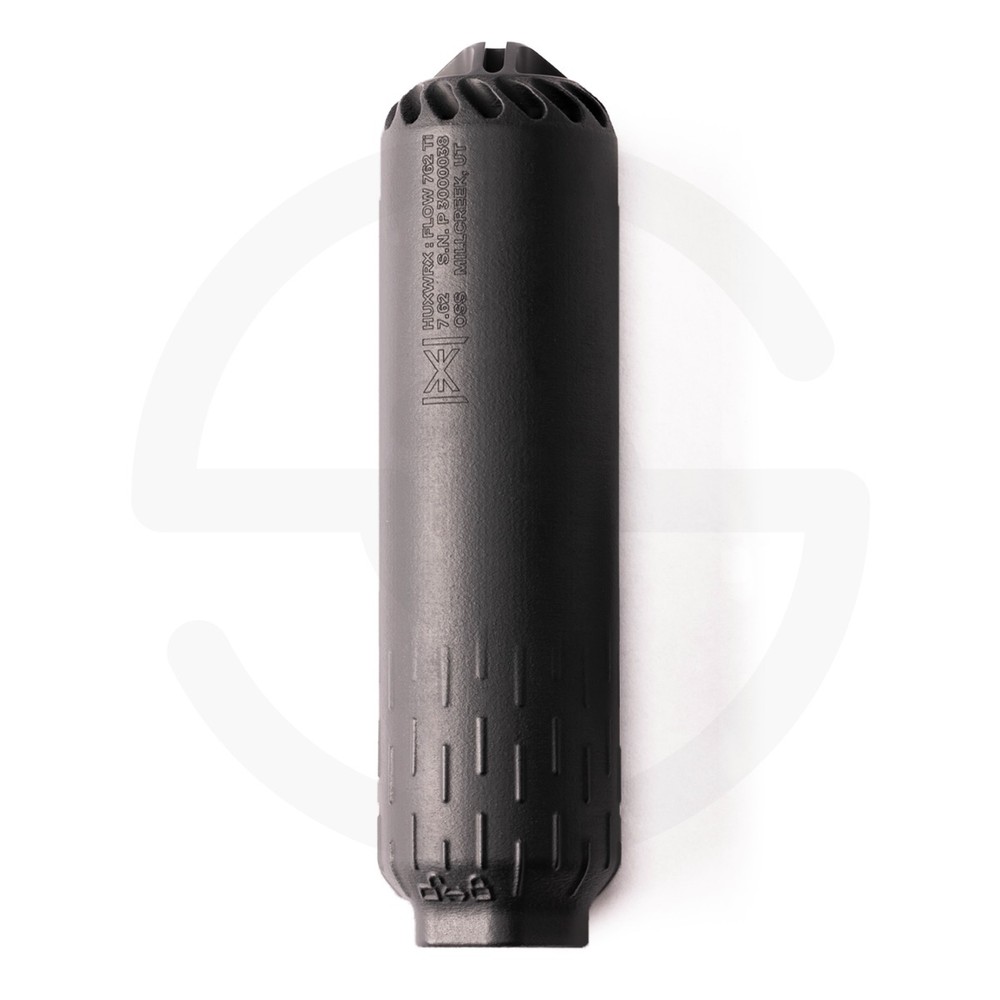
 For over a century, the recipe for making a firearm quiet was exactly the same: machine a bunch of metal cones (baffles), stack them inside a metal tube, and weld the whole thing shut. It worked, but it was heavy, gassy, and prone to breaking at the weld seams. With advancements in technology, the 3D printed suppressor has become the preferred choice.
But as we analyze the most requested gear at wintheguns.com in 2026, that century-old manufacturing process is officially dead. The modern “Winning Gun” doesn’t use a machined silencer; it uses a 3D printed suppressor, which offers advantages previously unattainable.
The introduction of the 3D printed suppressor has transformed the market, making it essential for modern firearm enthusiasts.
Driven by Direct Metal Laser Sintering (DMLS) technology, manufacturers are now “growing” suppressors out of titanium and Inconel dust. Here is why your next can needs to be printed, not milled.
1. The Physics of “Flow-Through” Geometry
The biggest complaint about traditional suppressors is “gas to the face.” The baffles trap the expanding gases, creating intense backpressure that blows toxic carbon back through the ejection port and into your eyes. It also beats your rifle’s internal parts to death.
To solve this, engineers realized they needed to vent the gas forward, swirling it through internal turbines and micro-channels.
-
The Manufacturing Wall: You physically cannot machine these complex, intersecting internal veins using a traditional CNC lathe.
-
The DMLS Solution: A 3D printer builds the suppressor one microscopic layer of metal dust at a time. This allows manufacturers to create impossible internal geometries—like a honeycomb or a jet engine turbine—that catch the gas, spin it, and push it out the front. The result is zero blowback and zero need to tune your gas block.
2. The Weight Deception: Ounces Equal Pounds
Hanging a traditional 18-ounce steel suppressor off the end of a 16-inch barrel ruins the balance of a rifle. It makes the gun swing like a boat oar.
Because 3D printing only places metal exactly where it is needed for structural integrity, engineers can hollow out the walls of the suppressor without sacrificing strength.
-
The Titanium Advantage: In 2026, cans like the HUXWRX FLOW 556 Ti are weighing in at an astonishing 11.4 ounces, while still being full-auto rated.
-
Pistol Dynamics: On handguns, the Silencer Central BANISH 9K utilizes 3D-printed titanium to hit a ridiculous 2.7 ounces. It is so light that it doesn’t even need a Nielsen device (booster piston) to cycle on a semi-automatic pistol.
3. 2026 Leaderboard: The DMLS Kings
If you are looking to enter the additive-manufacturing world this year, these are the heavy hitters dominating the market.
| Model | Material | 2026 “Winning” Advantage |
| HUXWRX FLOW 762 Ti | Grade 5 Titanium | The undisputed king of low-backpressure. Extremely light ($11.8\text{ oz}$) and multi-caliber capable. |
| B&T Print-XH RBS SC | Weldless Titanium / Inconel | Swiss-engineered for duty use. Features an Inconel blast baffle to survive short-barreled 5.56 abuse. |
| CAT ALLEYCAT 556 | Proprietary Alloy | Ultra-high output suppression in a remarkably short footprint, utilizing next-gen gas routing tech. |
| Gemtech Nebula 5.7 | Titanium | New for 2026: Specifically designed for the high pressures of 5.7x28mm and rimfire platforms. |
4. The Monolithic Strength Factor
Every weld on a traditional suppressor is a potential point of failure. If the welder had a bad day, or if the tube heats up and cools down too fast, the weld can crack, launching your baffles downrange.
A 3D Printed Suppressor has no welds. It is a single, continuous, monolithic piece of metal.
Whether it is printed in Grade 5 Titanium for weight savings or Inconel 718 (a superalloy used in aerospace) for extreme heat resistance, these suppressors lack the structural weak points of their predecessors. They can survive firing schedules that would melt a traditional tube-and-baffle can.
5. Maintenance: Chemistry over Brute Force
You cannot disassemble a monolithic 3D-printed suppressor. In the old days, this was a dealbreaker because carbon and lead would build up inside. In 2026, we don’t scrape baffles—we use chemistry.
-
The “Soak and Shoot” Method: Modern maintenance dictates that every 1,500 to 2,500 rounds, you plug the end of the suppressor, fill it with a specialized carbon solvent (like CAT 206 or Breakthrough Clean Suppressor Solvent), and let it sit for 24 hours.
-
The Purge: Drain the solvent, mount the wet suppressor to your rifle, and fire a magazine. The pressure and heat of the expanding gases will violently blow the dissolved carbon sludge out the front of the can, returning it to factory weight.
Conclusion: Leave the Tube Behind
The era of the heavy, gassy, welded metal tube is over. The 3D Printed Suppressor represents the most significant leap in firearms technology this decade. By utilizing aerospace manufacturing techniques, we finally have silencers that don’t punish the shooter, don’t ruin the rifle’s balance, and don’t fail under pressure.
Ready to upgrade your muzzle device?
We are constantly tracking the best tactical sweepstakes across the web so you don’t have to. Head over to wintheguns.com to browse the latest aggregated giveaways and find your chance to win next-gen 3D-printed suppressors and custom rifle setups today.
3D printed is a no brainer
I had no idea suppressors had become so advanced.
The future is now.
crazy to think it holds the pressure of the gases
3D printing has really been a game changer in silencer manufacturing, and I can see it becoming a lot more prevalant in many areas of gun manufacturing.
Printing is slower so price is about double a welded can. I can live with higher back pressure and a little more weight, especially since my AR is a piston upper. My bolt gun is for stand hunting so weight and back pressure are non-issues for me.
The welded suppressors are CNC welded by robots and are plenty strong. Mine are Inconel and are beltfed rated, one of which lives on a MCR60 with M16 lower. They work just fine and are half the cost of a printed flow through can. My flow through gets hot twice as fast as my welded cans in exchange for almost no gas from a DI gun, but I fixed that by going all piston except for my DMR which has the flow through now.
Wounder what the price would be?
What about home printed suppressors? I know there are major limitations there, but I think that’s where the 2a community needs to focus
BOE’s printed suppressors are worth checking out.
Sounds interesting .. if the price is ‘market friendly’.
The 3-D printing designs possible are just beginning to be explored– but might as well acquire something useful now as well!
I won a Disavowed Bantam in a contest and it is the first suppressor I have owned. So far, so good.
Really don’t know how I feel about a 3D printed suppressor. Safety comes to mind.
“Drain the solvent, mount the wet suppressor to your rifle, and fire a magazine.”
Fire the gun to clean the gun haha. That is pretty cool though
This is just one reason of many of why I want a 3d printer. I’m joking of course, I know it takes a lot more than just a regular 3d printer to produce a suppressor.
They make a lot of sense design-wise as you can create incredibly complex structures that just aren’t possible with “subtractive machining”. On the other hand, I’d be lying if I didn’t say I’m having a bit of a hard time wrapping my mind around the “printed is stronger” mantra. My brain sees it as every “speck” put down is a new “weld” and subject to failure. I tend to believe it but my mind still can’t deal with it for some reason.
-Ron
Great information on a game changer in the firearms community