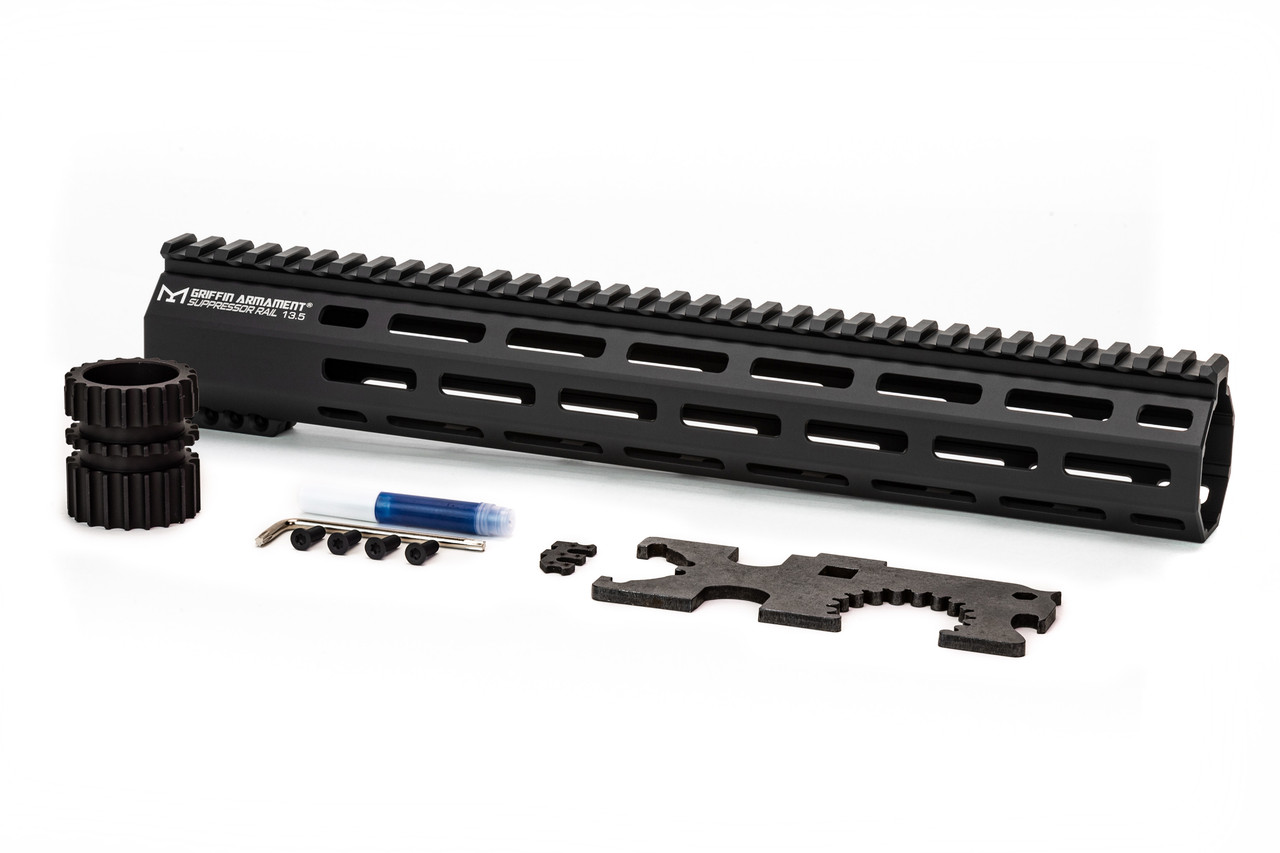
 For the better part of a decade, the AR-15 market was obsessed with dieting. Manufacturers competed to shave every possible ounce off their rifles, resulting in skeletonized receivers, pencil-thin barrels, and M-LOK handguards so thin you could practically bend them with your bare hands, ultimately compromising rail rigidity.
But as we analyze the top-tier builds requested by the wintheguns.com community in February 2026, the “ultralight” fad is officially dead.
Here is why thick-walled aluminum, monolithic uppers, and heavy handguards are the undisputed standards of 2026, showcasing the critical role of rail rigidity in ensuring optimal performance in today’s builds.
As we move forward, understanding the significance of rail rigidity will be essential for any serious builder.
1. The Night Vision Catalyst (The Deflection Problem)
The shift away from ultralight handguards was directly caused by the civilian night vision boom.
If you mount a $2,000 VCSEL infrared laser (like the Holosun IRIS or MAWL) to the end of a paper-thin, extruded aluminum M-LOK rail, you are going to experience Rail Deflection.
-
The Barricade Shift: When you rest a thin handguard on a wooden barricade or load heavily into a bipod, the aluminum physically bows upward. Because your laser is mounted at the end of that rail, the laser points upward too.
-
The Result: A slight flex in a lightweight handguard can cause your laser aiming module to shift your point of impact by 4 to 8 inches at 100 yards. In a defensive scenario, that is the difference between a hit and a catastrophic miss.
In 2026, we prioritize thick, structural handguards that do not flex under body weight or barricade pressure, ensuring your laser stays perfectly co-aligned with your barrel.
2. 2026 Leaderboard: The Structural Heavyweights
You no longer have to guess which rails will hold a zero. The industry has responded with handguards designed explicitly for structural integrity over weight savings.
| Model | Lock-Up System | 2026 “Winning” Advantage |
| LMT Monolithic (MRP) | True Monolithic | The gold standard. The handguard and upper receiver are forged from a single, continuous piece of aerospace aluminum. Zero flex. |
| Daniel Defense RIS III | Bolt-Up System | The modernized M-LOK version of the legendary SOCOM quad rail. Features a massive, 6-bolt steel barrel nut lockup. |
| Geissele Super Duty (Mk16) | Anti-Rotation Pin | Mates to the upper receiver via a steel alignment pin, physically preventing the handguard from twisting during harsh impacts. |
| BCM MK2 | Thermal Fit | The upper receiver is intentionally undersized, requiring a heat gun to install the barrel, creating a vault-like lockup that prevents harmonic shift. |
3. The Quad Rail Renaissance
Perhaps the most surprising trend of 2026 is the massive resurgence of the 1913 Picatinny Quad Rail.
Ten years ago, people mocked quad rails as “cheese graters” that were too heavy. Today, elite shooters are actively replacing their M-LOK rails with systems like the Daniel Defense RIS II or the BCM QRF.
Why it Wins: A quad rail is essentially four solid pillars of aluminum running the entire length of the barrel. It is structurally vastly superior to an M-LOK tube, which is full of empty slots and negative space. If you want absolute, bomb-proof confidence that your laser and backup iron sights will not shift when you drop the rifle on concrete, the Quad Rail remains undefeated.
4. Taming the Suppressor “Whip”
Rail rigidity goes hand-in-hand with barrel rigidity.
In 2026, almost every serious rifle is running a dedicated flow-through suppressor. Hanging 12 to 16 ounces of steel or titanium off the end of a thin “pencil” barrel creates severe barrel whip (harmonics) when the gun fires.
-
The SOCOM Profile: The 2026 standard is the medium-contour or “SOCOM” profile barrel. It is thicker behind the gas block, acting as a rigid spine for the rifle. It perfectly balances the weight of a heavy, rigid handguard and a suppressor, providing consistent, repeatable groupings even when the gun gets white-hot.
5. Maintenance: Torque is Everything
A rigid handguard is only as good as the hardware holding it together. In the era of heavy rails, your maintenance routine must rely on science, not muscle.
-
The Inch-Pound Rule: You can no longer just “crank down” the screws on your handguard. Uneven torque will pull the rail out of alignment with the upper receiver. You must use a dedicated FAT wrench or torque driver.
-
Witness Marks: Once your cross-bolts are torqued to the manufacturer’s spec (usually between 35 and 50 inch-pounds), use a paint pen to draw a line across the screw head and the aluminum rail. A quick visual inspection before you shoot will instantly tell you if the rigid lockup has vibrated loose.
Conclusion: Weight is Reliability
As the old saying goes, “Weight is a sign of reliability.” By abandoning the quest for the lightest possible rifle, the tactical community has built weapons that are infinitely more durable and capable of supporting next-generation aiming technology. The Rigid Rail ensures that when you zero your optics and lasers, they stay zeroed—no matter what you put the rifle through.
Ready to build a bomb-proof upper?
We are constantly tracking the best tactical sweepstakes across the web so you don’t have to. Head over to wintheguns.com to browse the latest aggregated giveaways and find your chance to win LMT Monolithic uppers, Daniel Defense RIS III rails, and premium tactical setups today.
People hang too much crap off the rail sums it up.
Having a light weight rail on your rifle definitely has its advantages, but if you have to worry about durability then the cons win. I much rather have a rail and rifle that can take a beating.
I think I’ll be fine, I don’t plan on hanging my tactical gallon of milk from my rails
RIII FTW!
Stronger is always better!!!
I’ve always considered lightweight a recipe for recoil. I prefer a balance. I don’t carry a rifle around all day so I don’t mind a little weight to make it more comfortable to shoot.
always been factor any builds for me
Never was a fan of the skeletonized parts.
I own both, I shoot both, same caliber same basic set up, except the suppressor. Went heavy barrel, standard milspec handguard for the reasons above.
Interesting read. Maybe people just need to hit the gym more and worry less about rail weight
Thanks for the info, I’ve never been a fab of putting my AR15 on a diet. If you can’t handle the weight – buy a toy!!!
I am glad to see the flimsy fad going away myself, I have NEVER used lightweight materials in my builds, because I want something that will handle the rugged use and abuse I put my firearms through.
I have an AR upper in .224 Valkyrie that I purchased from PSA several years ago. When attached to a completed lower, it is the lightest AR that I own. I am talking feather weight.
I have Magpul sights, a sling swivel, and a small light on my light weight rail. No issues even when banging against barricades. If you use a light rail do not expect it to allow you to put all the other junk on it. It is intended for a minimalist rifle. Know your application.
Always wanted to try to build my own rifle.
Get a Hodge Pinchlock or Geissele MK4/8 rail.
It’s a tough balance
Depends on your needs. If you’re all about accessories, then a heavy rail makes sense.
All good to know if I were to build a competition quality weapon system.
I would much rather have a heavy, durable rail than a lighter one. If I was a competitive shooter I might have a different opinion, but I’m not.
I like both. Depends on the build
Agree with John Coffeen, depends on the purpose for the build.
I feel like picatinny rails on top and bottom with M-lok on the sides of the rail are a good way to go
great article – got some adjusting to do!
An interesting read. I’m definitely interested in building a durable setup.