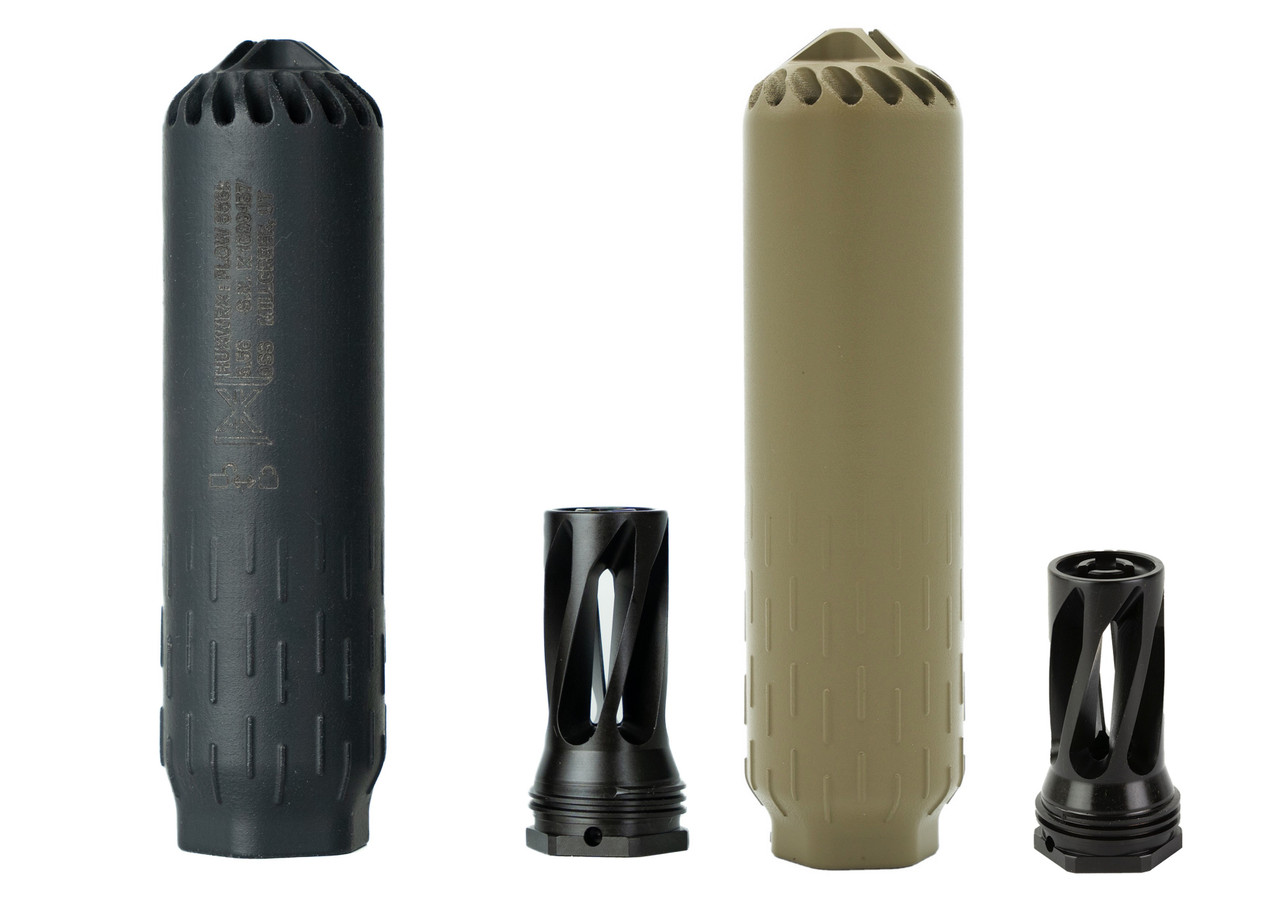
 If you bought a silencer a decade ago, you accepted a miserable reality: shooting suppressed meant crying. Traditional silencers trapped expanding powder gases so efficiently that the pressure had nowhere to go but backward. It blew straight down the barrel, out the ejection port, and directly into your eyes and lungs. We called it “gas to the face,” and we just dealt with it.
But as we analyze the top-tier builds requested by the wintheguns.com community in March 2026, the era of choking on toxic ammonia is officially dead.
The modern “Winning Gun” demands a flow through suppressor. Driven by massive advancements in 3D-printed titanium and Inconel, the industry has fundamentally changed how we manipulate sound and gas. Here is why your traditional baffled can is obsolete, and why you need to upgrade to a low back pressure system immediately.
1. The Physics of the Traditional Baffle Trap
To understand the 2026 shift, you have to look at the internal geometry of a legacy silencer.
Traditional suppressors use a stack of cone-shaped metal baffles. When a bullet passes through, those cones trap and hold the expanding gases to cool them down and silence the gunshot.
-
The Backpressure Problem: Because the gas is trapped in a sealed tube, it creates immense backpressure. This pressure forces the bolt of your AR-15 to unlock and violently cycle backward vastly faster than it was designed to.
-
The Penalty: This extreme bolt velocity beats your internal parts to death, increases felt recoil, and forces a toxic cloud of heavy metals and carbon directly into your respiratory system.
2. The 3D-Printed Low Back Pressure Silencer
In 2026, we do not trap gas; we route it.
A flow through suppressor abandons traditional stacked baffles. Instead, manufacturers use Direct Metal Laser Sintering (3D printing) to create incredibly complex, microscopic venting channels inside the silencer body that are physically impossible to machine on a traditional lathe.
-
The Forward Vent: As the bullet travels through the bore, the gas is instantly diverted outward into these 3D-printed channels. The gas spins rapidly around the outer core of the silencer, cooling down, before being vented completely out the front of the can.
-
The Result: The gas goes forward, toward the target, instead of backward into your face. The bolt velocity of your rifle remains virtually identical to shooting unsuppressed. You get a completely flat-shooting gun and clean air to breathe.
3. 2026 Leaderboard: The Best AR-15 Suppressor Options
The shift away from traditional baffles has forced every major manufacturer to adapt. Here are the low-tox heavyweights dominating the rails this year.
| Brand & Model | Material | 2026 “Winning” Advantage |
| HUXWRX Flow 556k | 3D Printed Titanium | The undisputed pioneer. Exceptionally lightweight, adopted by the FBI, and completely eliminates toxic blowback on short-barreled rifles. |
| SureFire RC3 | 3D Printed Inconel | The military standard, modernized. Reduces backpressure by 60% compared to the legendary RC2, while utilizing the exact same bomb-proof muzzle mounts. |
| SilencerCo Velos LBP | 3D Printed Inconel | The ultimate heavy-use option. Features a patented hoplon blast baffle that can withstand thousands of rounds of fully-automatic fire. |
| CAT ODB (Combat Application Technologies) | Titanium / Inconel | The 2026 Disruptor: Utilizes ultra-advanced fluid dynamics code to achieve flow-through backpressure reduction without sacrificing muzzle decibel ratings. |
4. The “Tuning” Cheat Code
Historically, if you wanted to reduce AR-15 gas while shooting suppressed, you had to completely rebuild your rifle. You had to buy a heavy H3 buffer, install an extra-power spring, and meticulously adjust a tunable gas block until the gun finally ran correctly.
With a modern low back pressure silencer, the tuning era is over.
Because a flow-through can does not restrict the gas leaving the muzzle, you do not have to change a single part on your rifle. You can take a factory AR-15 out of the box, thread a HUXWRX or a CAT suppressor onto the end, and the gun will run flawlessly with standard Mil-Spec buffers and springs.
5. Maintenance: The “Soak and Shoot” Method
Because you cannot take a 3D-printed flow-through suppressor apart, maintenance requires a fundamentally different approach in 2026. The intricate internal venting channels will eventually clog with heavy carbon and vaporized lead.
-
The Weight Check: Brand new, a titanium flow-through can might weigh 12 ounces. After 2,500 rounds, carbon buildup can increase that weight by 2 to 3 ounces.
-
The 2026 Protocol: You must chemically clean the can. Every 2,000 rounds, submerge the entire suppressor in a proprietary heavy-duty carbon solvent (like CAT 206 or Slip 2000) for 24 hours. The chemicals break down the rock-hard carbon. After soaking, mount the suppressor back on your rifle and fire one magazine rapidly. The massive internal pressure will physically blow the liquid carbon sludge out the front of the vents, resetting the silencer to factory weight.
Conclusion: Breathe Easier, Shoot Faster
We are no longer forcing 1990s silencer technology onto modern carbines. By embracing fluid dynamics and 3D printing, the industry has solved the most glaring flaw of suppressed shooting. The flow through suppressor preserves the lifespan of your weapon’s internal parts, flattens out your recoil impulse, and permanently ends the era of breathing toxic gas on the firing line.
Ready to upgrade your muzzle device?
We are constantly tracking the best tactical sweepstakes across the web so you don’t have to. Head over to wintheguns.com to browse the latest aggregated giveaways hosted by top industry partners, and find your chance to win elite flow-through suppressors, premium SBRs, and next-generation tactical gear today.
I firmly believe that “flow through” suppressors are the way to go BUT (and this is out of ignorance) is there a downside where the flow throughs create too little back pressure to operation some semi-auto firearms? Just curious.
I’m just starting to get into cans and want to add a flow through suppressor to my kit. The HUWRX stuff is high on my list for future purchases.
The only downsides are they heat up faster and the added cost.
But they also cool faster too, right?
Flow through suppressors are the way to go, no more gasses in the face.
Good information if I ever need or want one!
Certainly better for health not to be getting a face full of toxins
I have never shot with a silencer before so i have never experienced this but it sounds annoying like when you are standing in front of a fire and the wind decides to blow the hot smoke directly into your face and eyes.
Living in California just got a little tougher. That’s a nice list of suppressors.
I know Bear Creek Arsenal gets a lot of crap, but I have a couple of their ARs and haven’t had any problems with them. I don’t expect to take them to war or anything like that, but they’re good for light to moderate use. I mention this here because I have a suppressor (non floor through style) mounted to one of their side-charging uppers. Because of the way they do it, it seals up the back of the receiver so you don’t get all the gas in the face. It’s actually a GREAT suppressor host.
You sure like that phrase, “rules 2026”.
BOE makes a nice flow through.
love the concept
Certain silencer companies Do Nor want them removed from the NFA. Put that in your hat and smoke it.
Indeed this is where the phrase “go with the flow” is menat to be used!
I need to read up on the purpose of muzzle breaks
My next purchase
Also it’s nice that the 200 dollar tax stamp is no more
I bought a Velos. Just waiting on approval
I need a flow thru so bad, my polo k on my Daniel defense spits so much gas back in my face and thru the trigger well it leaves my trigger finger completely black
Very concise and nice info. Thanks!
Out of my price range.
With greater acceptance and no more tax stamp, this kind of info is even more relevant.
With less gas to the face why would you not go this route. It is better for you and your rifle.
I was at the range today and heard an AR with a muzzle breaker for the first time. With two walls between us, it was still load!
Not a suppressor fan!!
Cool read! I’m definitely looking to go the flow thru route if I get a suppressor.
Love my Huxworks cans!!! No gas to the face!!!
I found it interesting how flow-through suppressors reduce gas to the face while improving reliability and overall shooting comfort.
I find it interesting how flow-through suppressors are becoming popular because they reduce gas blowback and improve shooting comfort without sacrificing performance.
glad to hear it
Flow-through suppressors finally solved gas blowback without sacrificing serious performance.