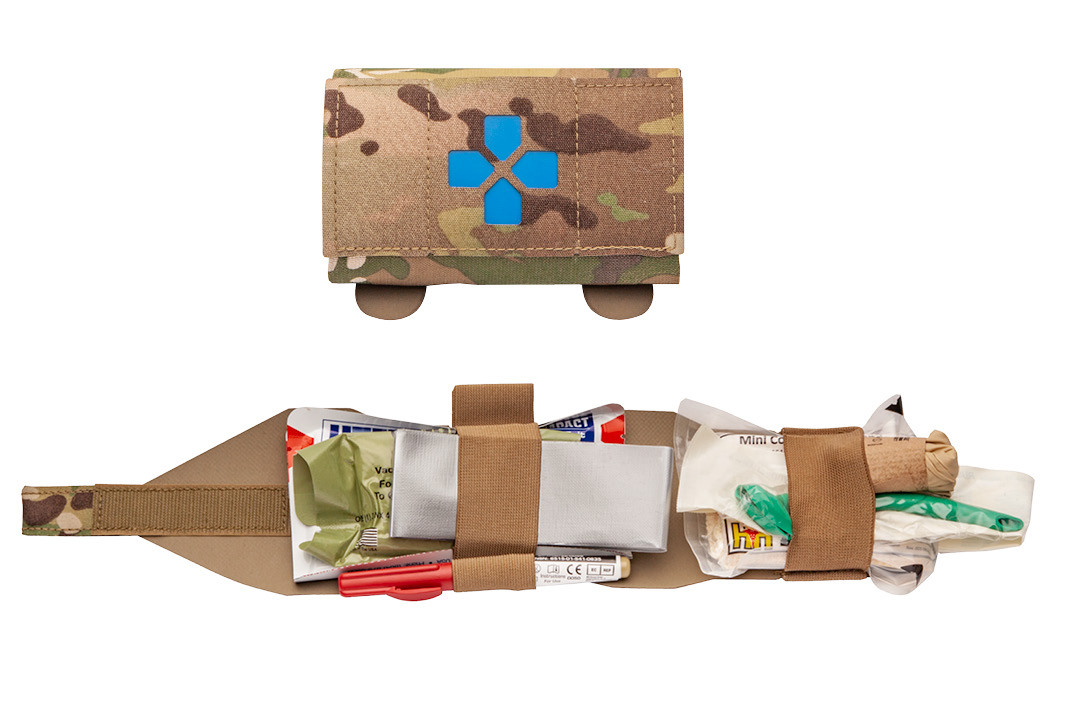
 For years, the tactical community suffered from a massive blind spot. We spent thousands of dollars on custom rifles, red dot sights, and body armor, preparing for the worst-case scenario. Yet, if you looked at the belts of most shooters at the range a decade ago, almost no one carried medical gear. We were preparing to make holes, but we had absolutely no way to plug them.
As we analyze the loadouts of the wintheguns.com community in March 2026, that negligent mindset has been completely eradicated.
The modern “Winning Gun” setup is incomplete without a blowout kit setup. Statistically, you are infinitely more likely to use medical gear in a car crash or a workshop accident than you are to fire your weapon in self-defense. Here is why an old-school first aid kit full of Band-Aids is completely useless for massive hemorrhage, and how to build the best tactical IFAK (Individual First Aid Kit) this year. Incorporating the best tactical IFAK into your gear is essential for preparedness.
1. The Physics of the Arterial Bleed (The Tourniquet Standard)
To understand the contents of a modern trauma kit, you have to understand how quickly the human body can lose blood. If a major artery in the leg or arm is severed, a person can bleed to death in under three minutes.
You cannot stop an arterial bleed with a tightly wrapped t-shirt or a leather belt. You need mechanical pressure.
-
The CoTCCC Standard: In 2026, you only carry tourniquets approved by the Committee on Tactical Combat Casualty Care. The undisputed kings remain the North American Rescue CAT (Combat Application Tourniquet) Gen 7 and the TacMed SOF-T.
-
The Windlass: These devices use a rigid nylon or aluminum windlass (a twisting rod) to physically crush the artery against the bone, completely occluding blood flow. If your tactical medical gear relies on a cheap, $10 Amazon knock-off tourniquet, the plastic windlass will snap under tension, and the patient will bleed out. Buy genuine gear.
2. Wound Packing: The Core of the Trauma Kit 2026
A tourniquet is a miracle device, but it only works on limbs. What happens if you take a laceration to the groin, the armpit, or the neck? These are “junctional” areas where a tourniquet cannot be applied.
The 2026 solution is aggressive wound packing using Hemostatic Gauze.
-
The Chemical Advantage: Modern trauma kits rely on products like QuikClot Combat Gauze or Celox Rapid. These aren’t just rolls of cotton; they are impregnated with a chemical agent (like kaolin or chitosan) that rapidly accelerates the body’s natural blood-clotting cascade upon contact.
-
The Technique: You do not just lay the gauze over the wound. You must physically push the hemostatic gauze deep inside the wound cavity, directly against the severed artery, and hold massive manual pressure for a full three minutes.
3. 2026 Leaderboard: The Best Tactical IFAK Pouches
Carrying the gear is just as important as knowing how to use it. The industry has moved away from massive, bulky pouches that get in the way of sitting in a vehicle, favoring ultra-compact, rapid-deployment sleeves.
| Brand & Model | Mounting Style | 2026 “Winning” Advantage |
| Blue Force Gear Micro Trauma Kit NOW! | Belt / MOLLE | The absolute benchmark for minimal footprint. A tiny elastic sleeve that deploys its contents instantly with a single pull tab. |
| Ferro Concepts Roll 1 | Armor Dangler | Specifically designed to mount horizontally under the rear plate bag of a plate carrier, keeping the small of your back perfectly clear. |
| Coyote Tactical Burrito | Belt Mounted | Laser-cut precision that holds exactly what you need (TQ, gauze, chest seals, gloves) without projecting out like a brick. |
| Live The Creed Responder | Ankle / EDC | The ultimate Gray Man medical solution. Allows you to comfortably conceal a full trauma kit around your ankle under standard pants. |
4. The “Blowout Kit Setup” Placement Rules
Where you mount your best tactical IFAK on your belt or plate carrier is a life-or-death decision.
-
The “Both Hands” Rule: You must be able to reach your medical gear with either your right hand or your left hand. If your right arm is injured, and your tourniquet is mounted securely on your right hip, you are in massive trouble.
-
The Small of the Back: The 2026 standard for battle belts is mounting the IFAK at the dead-center small of the back (the 6 O’Clock position). This allows you to reach back with either hand, grab the pull-tab, and rip the medical insert out to the front of your body where you can see it and work on it.
5. Maintenance: The Expiration of Tactical Medical Gear
Unlike an AR-15 magazine that can sit loaded in a closet for a decade, a trauma kit 2026 is full of perishable, chemical components that degrade over time.
-
The Vacuum Seal: Hemostatic gauze and twin-pack chest seals (used for penetrating chest trauma) are sterile and vacuum-sealed. Constant temperature shifts in the trunk of your car or rubbing against other gear will eventually compromise the plastic packaging. Once air and moisture get in, the hemostatic agents degrade, and the chest seal adhesives dry out.
-
UV Degradation: If you rubber-band a tourniquet to the outside of your plate carrier and leave it exposed to direct sunlight, the UV rays will physically degrade the nylon webbing. After a year in the sun, that webbing can snap when you crank the windlass.
-
The Protocol: Inspect your vacuum seals monthly. Replace your hemostatic gauze and chest seals every 3 to 5 years according to the manufacturer’s expiration dates, and keep your exposed tourniquets out of direct sunlight when not in use.
Conclusion: Stop the Bleed
You can be the fastest, most accurate shooter on the range, but if you cannot stop a massive hemorrhage, your tactical foundation is hollow. Building a dedicated blowout kit setup equipped with genuine CoTCCC-approved tourniquets and hemostatic gauze is a non-negotiable requirement for the modern defender. Get the gear, get the training, and become an asset to the people around you.
Ready to complete your tactical loadout?
We are constantly tracking the best tactical sweepstakes across the web so you don’t have to. Head over to wintheguns.com to browse the latest aggregated giveaways hosted by our industry partners, and find your chance to win premium tactical gear, custom firearm setups, and professional-grade equipment today.
Thanks for explaining these kits to me. I’ve needed to get some first aid materials but am never real sure of what to pack.
-Ron
IFAKs are very important. Yes, some have better IFAKs than others, however, the best IFAK is the one you have.
Who makes an inexpensive… i.e.. budget friendly kit, with all that is required, instead of trying to put a kit together piecemeal? It does get prohibitively costly.
Quality kits tend to go on sale around the major holidays.
Trauma kits being so expensive is insane
Seeing a lot of focus on tactical first aid lately. Definitely worth it, stopthebleed.org helps find courses that are local. Probably a good idea to reserve training for cheaper less durable equipment and keep your quality equipment in new condition so it doesn’t wear down and fail when it is needed.
Good to have a med pac!!
Position, contents, and knowledge will save your life. All bleeding stops eventually, it is the manner of how that matters most
I need to update mine.
The quick response during the stabbing at SHOT Show this year highlighted the importance and effectiveness of having a good kit and knowing how to use it
Im like the first guy in this blog. My mindset has never gone beyond the regular first aid kit preparation. Good blog
way better then digging through a pouch
You can never have too many IFAKs!
Good to know!
This article dropped at the right time. I’m looking to buy something
This is certainly something I need to prepare more for, so I appreciate all of the tips I can get!
I’m slacking. I need to invest in my first set up already
Trauma kits are sooo much better than a “first aid” kit – thanks for the info
I should really get a trauma kit for my camping supplies
Good article a lot to take in.
Great article. I keep my IFAK and first aid kit on the outside of my range bag or strapped to the MOLE on the back of my pack with a break away setup. It’s red and it’s marked as first aid. If it’s needed and someone else has to get it there’s no guesswork and no rummaging around for it; it can just be pull it off the bag so no one has to haul the whole thing. The IFAK is at the top so I don’t need to dig past tweezers, band-aids, and stuff that isn’t needed in a big hurry. I actually watched a former CIA guy on YouTube throwing his trauma and first aid stuff in random compartments. WTF?!
Training, training, training or you will not be effective when you need it. Also those likely to be around you when you need it need training. Followed by occasional practice or conscious visualization of what you will do in likely situations. It is not uncommon for people who have the right gear to bleed out because no one is properly trained to utilize the gear or they use it wrong ,and they might a limb that would have been saved if proper protocol was followed.
Stuff like this reminds me that I really ought to get a couple of kits together
Thanks for this well written and very educational blog.
A very interesting and important read.
Chest seals are crucial these days. “Neck to nuts” you can’t pack it or tie it – just seal it and keep the red stuff inside as best you can during transpo.
Train so you perform with what is in your kit when called upon.
Great information! If you happen to know reputable training classes/groups, that would be good to know also. Thanks!
important information
Have the materials AND know how to use them, before you need them.
quite interesting to read this.
quite interesting to read this Saturday afternoon