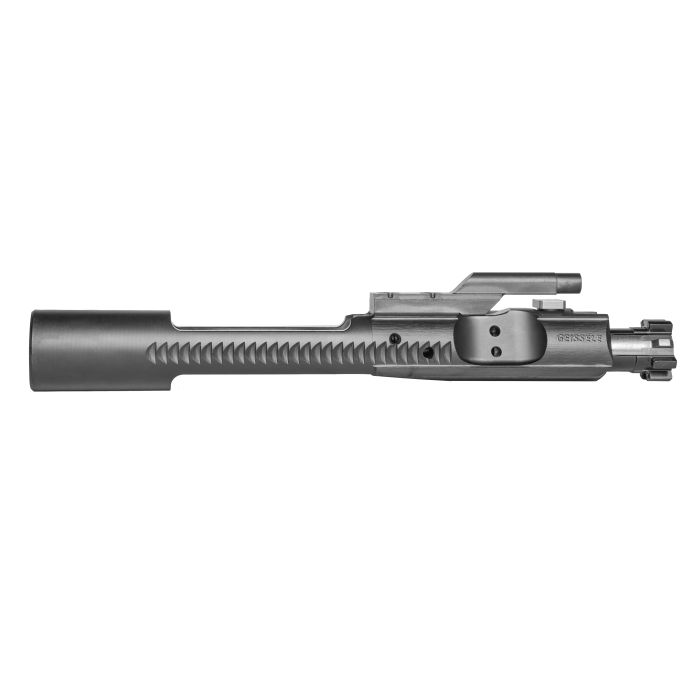
 If you built an AR-15 ten years ago, the conventional wisdom was simple: as long as the barrel was decent, the rest of the internal parts didn’t matter. We threw standard Mil-Spec phosphate parts into our receivers, drowned them in gun oil, and accepted that scrubbing rock-hard carbon off the bolt for two hours after every range trip was just part of the lifestyle.
As we analyze the top-tier builds dominating the wintheguns.com community in March 2026, that acceptance of mediocrity is officially gone.
Choosing the Best AR-15 BCG 2026 for Optimal Performance
For 2026, investing in the best AR-15 BCG 2026 is essential for enhancing the performance and longevity of your rifle.
The modern “Winning Gun” is defined by its ability to run flawlessly, even when bone-dry and suppressed. The heart of the AR-15 is the Bolt Carrier Group (BCG). It dictates the entire mechanical rhythm of your weapon. If it fails, your rifle is nothing more than an awkward club. Here is why your basic factory parts might be a ticking time bomb, and how to choose the best AR-15 BCG 2026 to guarantee absolute AR-15 reliability.
1. The Physics of the Heartbeat (Gas and Friction)
To understand the 2026 shift in BCG materials, you have to look at the violent physics happening inside your upper receiver.
-
The Engine: When you fire a round, roughly 10,000 to 15,000 PSI of super-heated, carbon-filled gas is blasted down the gas tube and directly inside the bolt carrier. This gas expands, forcing the bolt to unlock, violently throwing the heavy steel carrier backward against the buffer spring.
-
The Friction Penalty: All of this happens in milliseconds. The metal-on-metal friction is immense. If your carrier is rough and porous, it generates excess heat and acts like a magnet for carbon buildup. Once that carbon turns to sludge, the friction overcomes the spring tension, and your rifle jams. A modern bolt carrier group upgrade completely attacks this friction at a microscopic level.
2. The Coating War: DLC vs Chrome BCG
In 2026, we have largely abandoned standard Manganese Phosphate. While phosphate is durable and holds oil well, it is porous and feels like sandpaper, requiring heavy lubrication to function.
The industry has moved to advanced surface treatments that are inherently “slick.”
-
Hard Chrome: The retro king is back. Chrome is incredibly slick, naturally resists carbon adhesion, and is absurdly easy to clean. You can usually wipe a chrome BCG totally clean with a dry paper towel.
-
DLC (Diamond-Like Carbon): In the DLC vs Chrome BCG debate, DLC is the modern heavyweight. It is applied in a vacuum chamber, creating a microscopic layer that is quite literally as hard as a diamond. It looks matte black like phosphate, but it feels like wet ice. It requires almost zero lubrication to cycle flawlessly.
-
NP3 (Teflon Nickel): This aerospace coating physically impregnates Teflon directly into the metal. As the carrier wears, it exposes more Teflon, meaning the BCG actually self-lubricates over its entire lifespan.
3. 2026 Leaderboard: The Best AR-15 Bolt Carrier Kings
The premium market is stacked with incredible aerospace engineering. If you are building a duty rifle, these are the heavyweights you want cycling inside your upper.
| Brand & Model | Coating / Finish | 2026 “Winning” Advantage |
| Sionics Weapon Systems | NP3 | The absolute gold standard for slickness. It feels like it runs on ball bearings, cleans up in seconds, and features some of the strictest Quality Control (QC) in the industry. |
| Geissele REBCG | Nanoweapon (DLC) | The premium disruptor. Forged from advanced medical steel and coated in Geissele’s proprietary DLC, it is virtually impervious to the massive heat generated by heavy suppressor use. |
| Bravo Company (BCM) | Phosphate / Chrome Lined | The working-class hero. While the outside is traditional phosphate, the internal gas pathways are hard-chrome lined. It is the benchmark for bomb-proof, combat-proven reliability. |
| Microbest | Full Hard Chrome | The manufacturer behind many top-tier brands, now selling directly to the public. You get Tier-1 chrome plating and perfectly staked gas keys without the massive brand-name markup. |
4. The Steel Debate: Carpenter 158 vs. 9310
The coating dictates the friction, but the steel dictates the strength. The actual bolt head (the part that grabs the bullet) takes the most brutal punishment of any part in the rifle.
-
Carpenter 158: This is the original “Mil-Spec” standard developed for the military. It is a proprietary steel blend that is incredibly tough and proven over decades of combat. If you buy C158, you know exactly what you are getting.
-
9310 Steel: This is the modern disruptor. On paper, 9310 steel is roughly 7% to 8% stronger than Carpenter 158. However, there is a catch: it must be heat-treated perfectly. If a cheap manufacturer messes up the heat-treat process in the oven, 9310 becomes brittle and will snap the locking lugs right off the bolt. Only buy 9310 bolts from elite, trusted manufacturers.
5. Maintenance: Gas Key Staking and the Ring Test
You can buy the most expensive BCG on the planet, but it relies on two tiny fail points to function: the gas key screws and the gas rings.
-
The Gas Key Stake: The gas key sits on top of the carrier and catches the gas from the tube. It is held on by two Allen screws. If those screws rattle loose under recoil, the gas vents into the atmosphere, and your gun becomes a single-shot bolt action. Look at the metal around those screws—it must be aggressively “staked” (physically smashed with a punch) into the screw heads to lock them permanently in place.
-
The Gas Ring Protocol: The bolt tail has three tiny, split metal rings (like piston rings in a car engine) that trap the gas. They wear out. Every 2,000 rounds, pull the BCG out, pull the bolt head forward, and stand the entire unit upright on a table resting on the bolt face. If the heavy carrier slides down under its own weight, your rings are dead. Replace them with a $5 set of Mil-Spec rings immediately to restore your AR-15 reliability.
Conclusion: Stop Scrubbing, Start Shooting
A rifle is only as reliable as its weakest moving part. Continuing to run an un-lubricated, porous phosphate BCG heavily guarantees a malfunction when you need the gun the most. By investing in the best AR-15 bolt carrier featuring a modern DLC, NP3, or Hard Chrome finish, you dramatically reduce friction, eliminate the need for heavy wet lubricants, and ensure your rifle cycles violently and flawlessly every single time you press the trigger.
Ready to drop a premium heartbeat into your receiver?
We don’t host the giveaways; we are a dedicated aggregator tracking the absolute best tactical sweepstakes happening across the web right now. Head over to wintheguns.com to browse the latest verified giveaways hosted by our trusted industry partners—like the “Aim For The Spring” sweepstakes with Cyelee Optics or Apache Arms—and find your chance to win elite BCGs, custom uppers, and premium tactical gear today.
I’ve put together a LOT of ARs and the BCG that has given me the best performance for the price would have to be the BCM. That being said, the others listed are very good as well.
JMHO
-Ron
BCM does make a nice BCG.
11.5″ barrelled M16. I have had a no name bolt head go 20k+ as well as a mill contract Colt. I have had mil contract Colt, FN, and a very expensive top line bolt head all last less than 5k of hard use. Everyone broke at the cam pin hole eventually. Right now I have a Colt bolt head in the upper with about 13-15k on it. The upper and carrier are original Colt M16A1 and they have over 70k on them. If the bolt headspaces good when I replace the barrel, I keep using it. I run the gas rings ~10k then replace them. Disconnectors get replaced at the same time as I have had the back leg break off around 12-15k-ish twice.
With the talk about high-tech coatings and high-end manufacturers, I expected serious sticker shock. There were some of those, but most were actually reasonably priced and comparable to other non-discounted BCGs. Definitely worth the consideration with new builds and upgrades.
Good information to know. There are a lot of different BCGs.
Honestly, in today’s market, they are all pretty much the same… the only difference, are the prices.
I guess that hex head bolt screw I have in the garage probably wouldn’t be a good BCG
Sandcutter is the way but I do enjoy my DD bcg
I’ll have give my rifles the gas ring test.
Good info. Thanks again
Awesome read. Great information to know. Definitely going to look into a nicer bolt carrier in the future.
There are quite a few more bolt material options than simply C158 and 9310 these days.
Good info!
Good article!
I always learn something from these
Honestly, I just go middle of the road. I don’t need anything super high performance and I don’t want to get anything budget
Chrome is king
Coating are gucci, and cost like they are
Buy what you like
Shoot what you want
Just clean it, oil it up and throw it in
I have always used Stainless with no issues
Great info, looking to upgrade a couple of my rifles and this really helps.
Very nice info on BCGs, extremely helpful
Great article very good read.
I vote for the Bravo Company (BCM)!!
Great, I currently don’t have a mid-tier build because I’m too poor. I was told my arsenal is like if I was back in 2008. XD
nice breakdown
There is alot to know and this just skims the surface. Good information.
Great info!
I like how this breaks down why upgrading your bolt carrier group can make a big difference in reliability since it’s basically the heart of the rifle’s entire cycling system ?
The bolt carrier is the “heart” of the gun. Make sure it is a good one!
This is true, you see examples of bolt or carrier failure at camp perry every year.
The AR platform will always s*@t where it eats.
A quality BCG is so important for any AR.
Great article, I learned a lot from reading this. Will definitely help me making purchasing decisions in the future.
I think everyone should read this!
Still so much to learn.
good info
Had to look back at this one. Thanks for the info