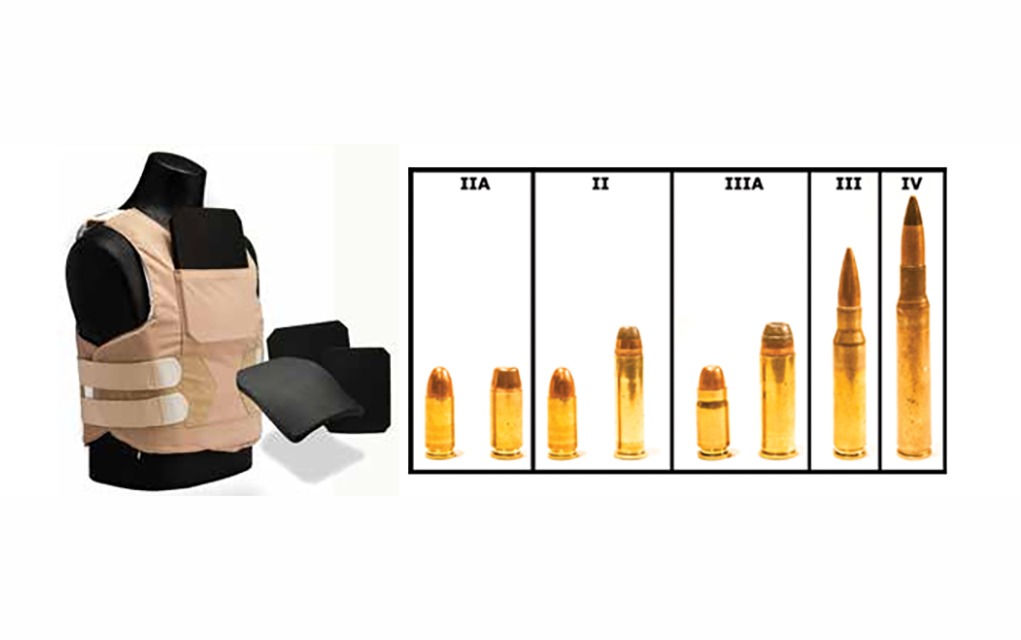
If you bought body armor a decade ago, you probably made a terrible, potentially fatal mistake: you bought steel plates. The marketing was incredible—steel was cheap, theoretically indestructible, and lasted forever. But as we analyze the loadouts of the professionals across the wintheguns.com community in March 2026, steel armor has been completely and permanently eradicated from serious tactical setups.
When considering personal protection, it’s essential to focus on the best Level IV body armor available today, as it provides advanced safety and performance in the field.
The modern “Winning Gun” loadout requires armor that absorbs the kinetic energy of a rifle round without weaponizing the bullet against the wearer. We have officially entered the era of advanced composite materials. But the industry is currently split between two incredible technologies: ultra-hard Ceramic and ultra-light Polyethylene. Here is exactly why your legacy steel plates are a death trap, and how to choose the best Level IV body armor for your mission this year.
1. The Physics of Spalling (Why Steel is Dead)
To understand the ceramic vs polyethylene plates debate, you first have to understand why the industry abandoned steel.
When a 5.56mm rifle round traveling at 3,000 feet per second hits a steel plate, it doesn’t just stop. It shatters.
-
The Fragmentation Trap: The lead and copper jacket of the bullet violently explode outward in a 360-degree radial pattern along the face of the steel plate. This is called “spalling.”
-
The Fatal Flaw: If you are wearing a steel plate on your chest, that fragmentation acts like a saw blade, traveling directly up into your throat and jaw, or out into your brachial arteries in your arms. You might stop the bullet, but you will bleed to death from the shrapnel. Modern composite armor completely swallows the bullet, trapping the fragmentation safely inside the plate.
2. The Heavyweight Champion: Level IV Ceramic
If your absolute primary concern is stopping the deadliest, most armor-piercing ammunition on the planet, you only have one choice: Ceramic.
-
The Shatter Mechanic: A best Level IV body armor plate uses a strike face made of incredibly hard ceramic (like Alumina Oxide or Silicon Carbide) backed by a woven composite material. When an armor-piercing .30-06 round hits the plate, the ceramic violently shatters, physically breaking the hardened steel core of the bullet. The woven backing then catches the broken bullet fragments like a catcher’s mitt.
-
The Weight Penalty: The ultimate protection comes at a cost. A standard 10×12 Level IV ceramic plate weighs between 7 and 8 pounds. Strapping 16 pounds of ceramic to your chest and back drastically reduces your mobility and endurance on foot.
3. 2026 Leaderboard: The Best Tactical Armor Plates
The armor industry is heavily regulated by the National Institute of Justice (NIJ). You should never buy armor that isn’t lab-certified. Here are the heavyweights dominating plate carriers this year.
| Brand & Plate Profile | Material | 2026 “Winning” Advantage |
| Highcom 4S17M | Level IV Ceramic | The undisputed working-class hero. NIJ certified, multi-curve for extreme comfort, and delivers true edge-to-edge protection without breaking the bank. |
| Hesco 3810 | Level III+ Composite | The ultimate lightweight professional choice. Weighs under 4 pounds per plate, stopping 5.56 and 7.62×39, but sacrifices Level IV armor-piercing protection for speed. |
| RMA 1155 Multi-Curve | Level IV Ceramic | The budget tank. Extremely heavy, but virtually indestructible and famously defeats multiple hits of 30-06 AP in independent testing. |
| ShotStop Duritium | UHMWPE Polyethylene | The ultra-thin disruptor. Uses proprietary advanced polyethylene to achieve rifle-rated protection at a fraction of the thickness of traditional plates. |
4. The UHMWPE Revolution: Polyethylene Plates
If you are building a lightweight plate carrier setup for rapid deployment, vehicle operations, or long-distance hiking, ceramic is simply too heavy. The 2026 solution is UHMWPE (Ultra-High-Molecular-Weight Polyethylene).
-
The Melting Mechanic: Polyethylene plates are essentially highly compressed, microscopic layers of plastic. When a rifle bullet hits the plate, the friction of the spinning bullet physically melts the plastic. The plastic instantly re-hardens around the bullet, trapping it.
-
The Cheat Code: These UHMWPE body armor 2026 plates are absurdly light. A Level III polyethylene plate can weigh just 2.5 pounds and is so buoyant it will actually float in water.
-
The Green Tip Flaw: Polyethylene has one major weakness: it relies on friction to melt. If you are shot with an M855 “Green Tip” 5.56 round (which has a steel penetrator core), the steel core will punch right through the melting plastic. To stop Green Tip, you must step back up to a Ceramic blend.
5. Maintenance: The “Drop Test” Micro-Fracture
When you wear composite armor, you are wearing high-tech life support equipment. You cannot throw it in the trunk of your car like a gym bag.
-
The Ceramic Weakness: Ceramic is incredibly hard, but it is also brittle. If you drop a bare Level IV plate directly onto concrete from shoulder height, the ceramic strike face can develop microscopic cracks.
-
The 2026 Protocol: If a plate has a micro-fracture, a bullet will slip right through the crack instead of shattering. Treat your armor with respect. If you take a massive fall directly onto your chest, or if your plates are in a severe vehicle rollover, you must contact the manufacturer to have the plates x-rayed. Never trust your life to a compromised strike face.
Conclusion: Match Your Threat Profile
There is no “perfect” armor plate; there is only the right plate for your specific threat profile. If you live in an environment where high-powered hunting rifles and armor-piercing ammunition are common, you must bear the weight of a Level IV Ceramic setup. But if you are prioritizing speed, urban evasion, and a lightweight plate carrier setup, modern Polyethylene is the ultimate tactical advantage. Drop the steel, upgrade your composites, and protect your vitals.
Ready to maximize your brand’s reach with the ultimate giveaway?
At Win The Guns, we have officially leveled up from an aggregator to a premier tactical marketing agency. We know what the modern defender wants, and we know exactly how to get it in front of them. We partner directly with top-tier body armor, firearm, and gear manufacturers to host, manage, and execute fully compliant, turnkey gun giveaways on our massive platform. If your brand wants high-intent leads without the legal and logistical headache, let us handle the sweepstakes while you focus on manufacturing the best gear on earth.
Never have worn any armor yet
Some of the polymer armors also have layered molecular chains that have the chains meet and right angles at the layer boundaries to make projectiles want to change direction when passing through.
There are definitely pro and cons when comparing different plates. I prefer steel plates. They offer protection while also being affordable. Obviously, if I had a higher budget I would probably go with different ones. But for now steel it is.
Before I even read this I thought, “i’d want steel plate”. After reading this, I still want steel plate but with some of the lightweight plastic inserts
I’d wear armor if I thought there was a threat. For that matter, If I thought there was a threat, I might just stay home.
I agree with what Ryan said earlier. Steel plates are better than nothing and I really wonder if the soaking issue is overstated. I know it is definitely a concern, but I’ve never actually seen and evidence of anyone actually dying because of the spalling. Will it suck? Yes! Is it a (calculated) risk you’re willing to take? That depends on your budget.
Lastly, I’ve also never seen any of the testing done on a fully loaded plate carrier. Maybe the incoming bullet passes through a loaded magazine first, or whatever else you might have on your chest (or back).
RMA runs pretty frequent sales on their plates.
Don’t have any armor, but an interesting read.
technology continuous to provide new options
I’ve got steel
I’ll stick with steel for now.. I have 3 set-ups.
Well maybe I’ll have to buy some level IV plates now
I have steel, and trust it to do what it is supposed to do.
Weight is always a concern, but conditioning should also be just as high …train then train some more …and wear what you want
Only reason that most people would want body armor is just to train in for cool factor really, unless you’re in a job where you actually need it like military or police. It could be nice to have just at home if you can throw it on quickly in an emergency, like if you hear someone breaking in or something and you have it laying in the same spot as your gun then you might as well toss it on. But outside of that, what use do we really have for it as just everyday civilians?
I STILL am yet to get my first plate carrier 🙁
After reading this, I’d personally choose Level IV ceramic since it’s built to stop armor-piercing rounds, even if it means carrying a bit more weight.
Saving up my first set of a plate carriers.
Not into body armour. Not planning to go to war!!
Good information here. Have a few setups but always looking at new technologies
Praying I’ll never need armor in the first place!
Smells a bit like Ai writing. If I’m wrong it’s great work, if I’m right it’s still pretty okay.
Spalling could be a problem but most steel is encased in other materials isn’t it? I mean isn’t the plate in the middle or rear, or am I just designing things again. I’ve never had armor beyond multiple broken lids and shin guards. (broke things mtb racing)
great info
If only level IV plates were more affordable…
Don’t own any body armor, but nice to know
If only plates, other than steel, were more affordable.
Plates are on my list for this year.
The only standard rifle round going through level IV is the .277 Fury which uses tungsten from China.
Good food for thought – thanks.
Think I’d lean towards ceramic.
Great read!